Golf tools · Golf clubs explained
Types of golf clubs: every club in the bag explained
There are five types of golf clubs: woods (including the driver), hybrids, irons, wedges and the putter. The Rules of Golf allow up to 14 clubs, usually a driver, one or two fairway woods or hybrids, irons, two to four wedges and a putter.
Updated November 2026 · Typical lofts for modern clubs
The five types
Golf club types at a glance
Big heads and long shafts for distance. Lofts from about 9° to 24°.
Part wood, part iron. Easier to hit than the long irons they replace.
Numbered 3 to 9. Higher number means more loft, shorter and higher shots.
The most loft in the bag, for short shots, chips and bunkers.
A flat-faced club for rolling the ball into the hole.
The bag
Every club in a typical bag
Every club
Golf club names, lofts and what each one is for
Typical lofts for modern clubs. Tap a club to see lofts by brand and set.
| Club | Type | Typical loft | Used for |
|---|---|---|---|
| Driver | Wood | 9°–12° | Longest club. Tee shots on par 4s and par 5s. |
| 3-wood | Wood | 15° | Long second shots and tee shots when you need control. |
| 5-wood / 7-wood | Wood | 18° / 21° | High, soft long shots from the fairway or rough. |
| Hybrid (3H–5H) | Hybrid | 19°–27° | Replaces long irons. Easier to launch from the rough. |
| Long irons (3–5) | Iron | 18°–27° | Long approach shots. Many golfers swap them for hybrids. |
| Mid irons (6–7) | Iron | 23°–34° | Approach shots from about 130 to 170 yards for most golfers. |
| Short irons (8–9) | Iron | 31°–42° | Shorter approaches where accuracy matters most. |
| Pitching wedge (PW) | Wedge | 43°–46° | Full shots into the green and longer chips. |
| Gap wedge (GW / AW) | Wedge | 48°–52° | Fills the distance gap between PW and sand wedge. |
| Sand wedge (SW) | Wedge | 54°–56° | Bunker shots, pitches and short full shots. |
| Lob wedge (LW) | Wedge | 58°–60° | High, short shots that stop quickly. |
| Putter | Putter | 3°–4° | Rolling the ball on the green. Used on almost every hole. |
Iron types
Blades vs cavity backs, forged vs cast
- Muscle back (blade): solid back with the weight behind the center. Most feel and control, but mishits lose more distance; best for consistent strikers.
- Cavity back: weight moved to the edges, which keeps mishits straighter and longer. Most game improvement sets are cavity backs.
- Forged: shaped from a solid piece of soft steel. Usually a softer feel and a higher price.
- Cast: poured into a mold, which allows hollow and multi-material designs that add forgiveness. Most game improvement irons are cast.
- Most golfers score better with cavity backs. Blades and forged sets suit players who hit the center often.
Building a bag
How many clubs should be in your bag?
- The limit is 14. You can carry fewer, and many golfers do.
- Beginner (9–11 clubs): driver, a 5-wood or hybrid, 6-iron to 9-iron, pitching wedge, sand wedge and putter.
- Typical 14-club bag: driver, 3-wood, a hybrid or 5-wood, 4-iron to 9-iron, pitching wedge, gap wedge, sand wedge, lob wedge and putter.
- Keep even gaps of about 10 to 15 yards between clubs. Check yours with the club distance chart.
Glossary
Golf club terms explained
- Loft
- The angle of the clubface. More loft sends the ball higher and shorter.
- Lie angle
- The angle between the shaft and the ground at address. A lie that's too upright or too flat pushes shots left or right.
- Bounce
- The angle on the sole of a wedge that stops it digging into sand or soft turf. More bounce suits soft conditions and steep swings.
- Shaft flex
- How much the shaft bends. Faster swings usually need stiffer shafts. See the swing speed chart.
- Smash factor
- Ball speed divided by club speed. It shows how well you hit the center of the face; about 1.45 to 1.50 is excellent with a driver.
Sources
How we got these numbers
A starting point, not a fitting. These charts use published specs and typical ranges. A club fitter can check loft, lie, length and shaft for your swing.
Lofts are typical values for modern clubs, cross-checked against published loft guides. The 14-club limit is from the Rules of Golf. Last checked November 5, 2026.
Now find your real numbers.
Track your shots in TheGrint to see how far you really hit every club.
FAQ
Golf club questions
What are the types of golf clubs?
There are five types: woods (including the driver), hybrids, irons, wedges and the putter.
How many clubs can you have in a golf bag?
The Rules of Golf allow up to 14 clubs. You can carry fewer, and many beginners carry 9 to 11.
What golf clubs does a beginner need?
A driver, a 5-wood or hybrid, 6-iron to 9-iron, a pitching wedge, a sand wedge and a putter is a complete starter set.
What is the difference between a hybrid and an iron?
A hybrid's wider, hollow head puts weight low and deep, so it launches higher and is easier from the rough. Hybrids usually replace the 3-, 4- and 5-iron.
What are the names of golf clubs?
Driver, fairway woods (3-wood, 5-wood, 7-wood), hybrids, irons (3-iron to 9-iron), wedges (pitching, gap, sand and lob wedge) and the putter.
What is lie angle?
Lie angle is the angle between the shaft and the ground when the club sits flat. If it is too upright or too flat for you, shots tend to start left or right.
More club guides
Keep going
Track it in TheGrint
See how far you really hit every club
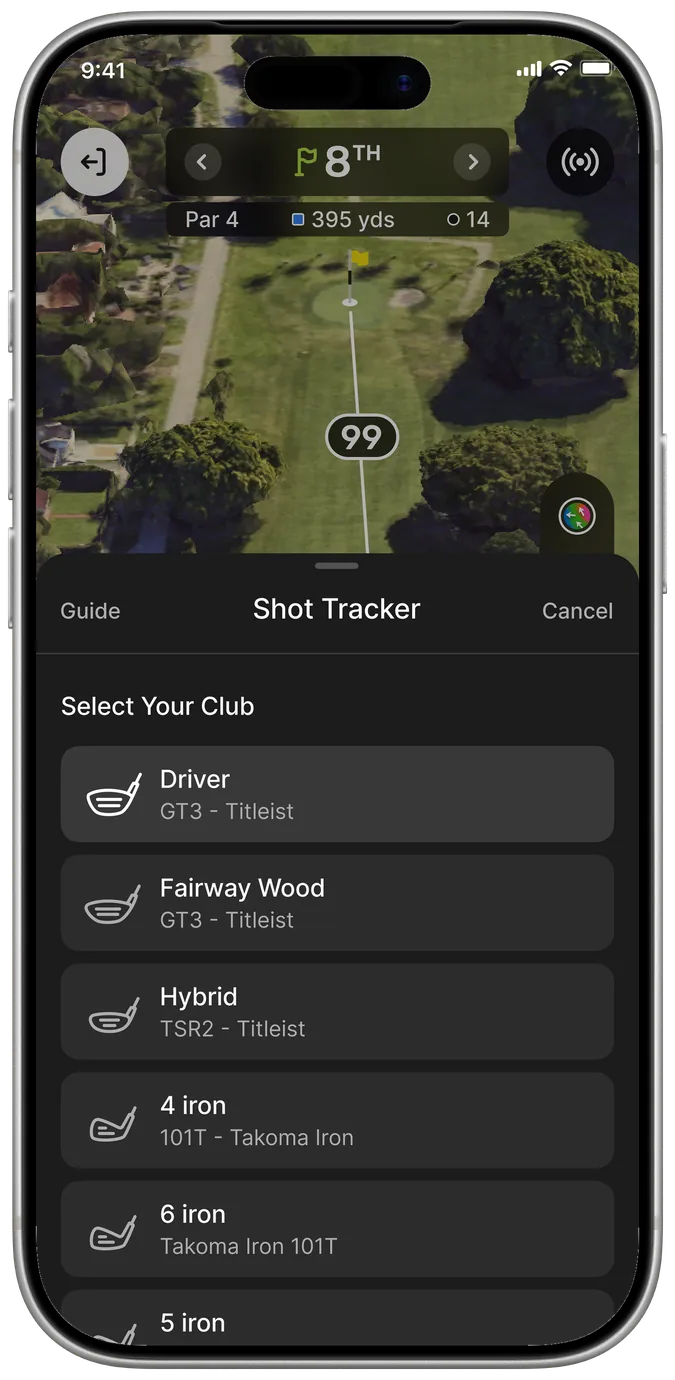
- Pick the club you're hitting
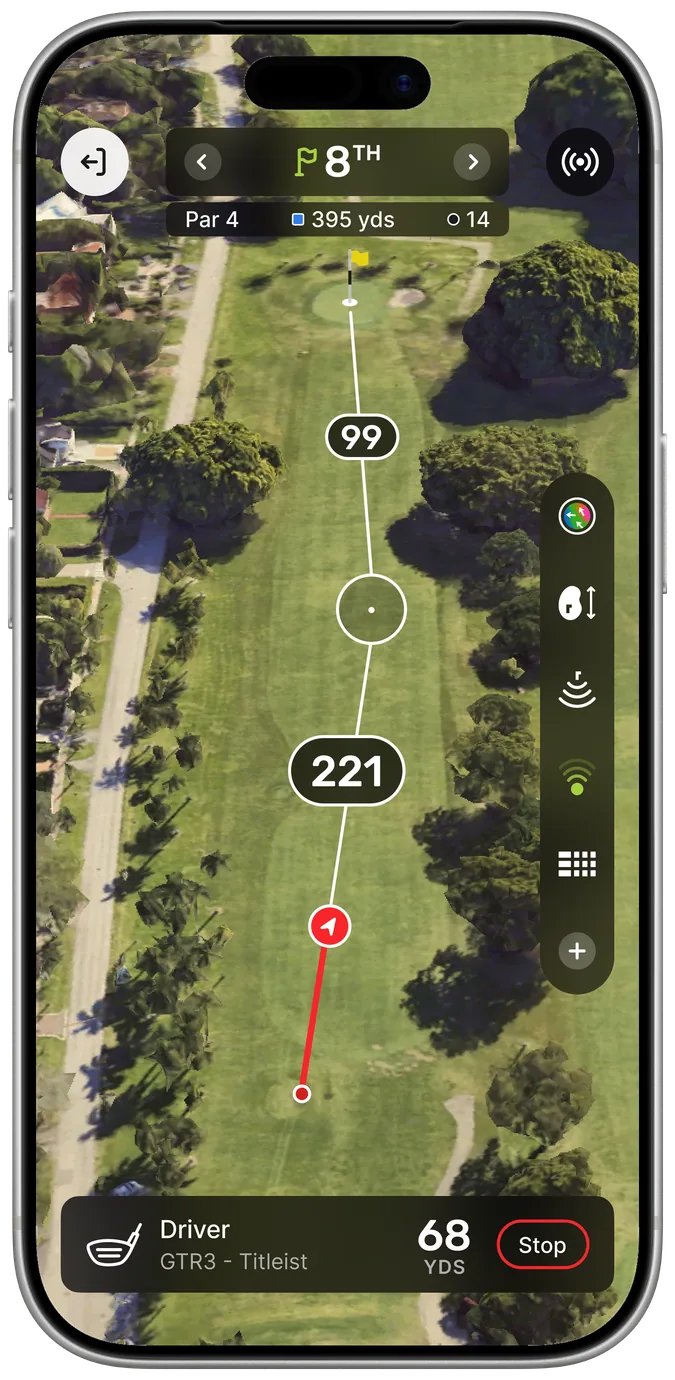
- Hit, then walk to your ball
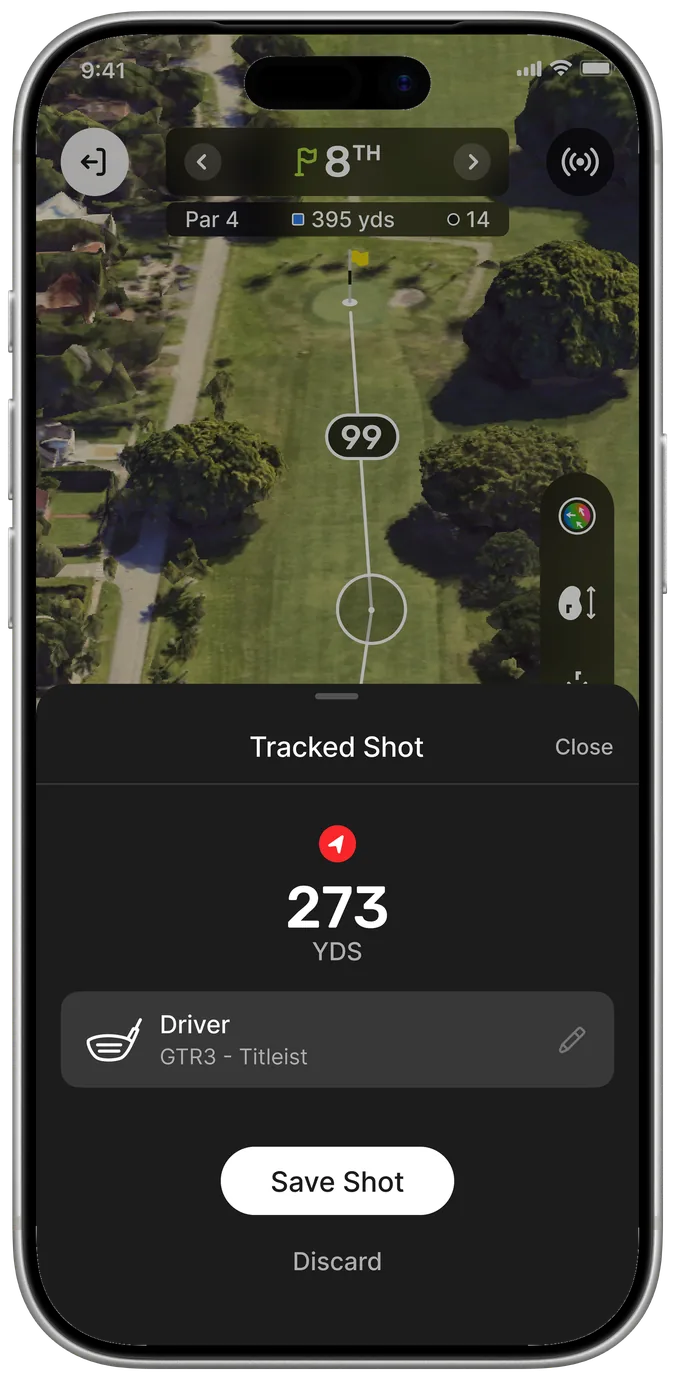
- Tap stop to save the shot
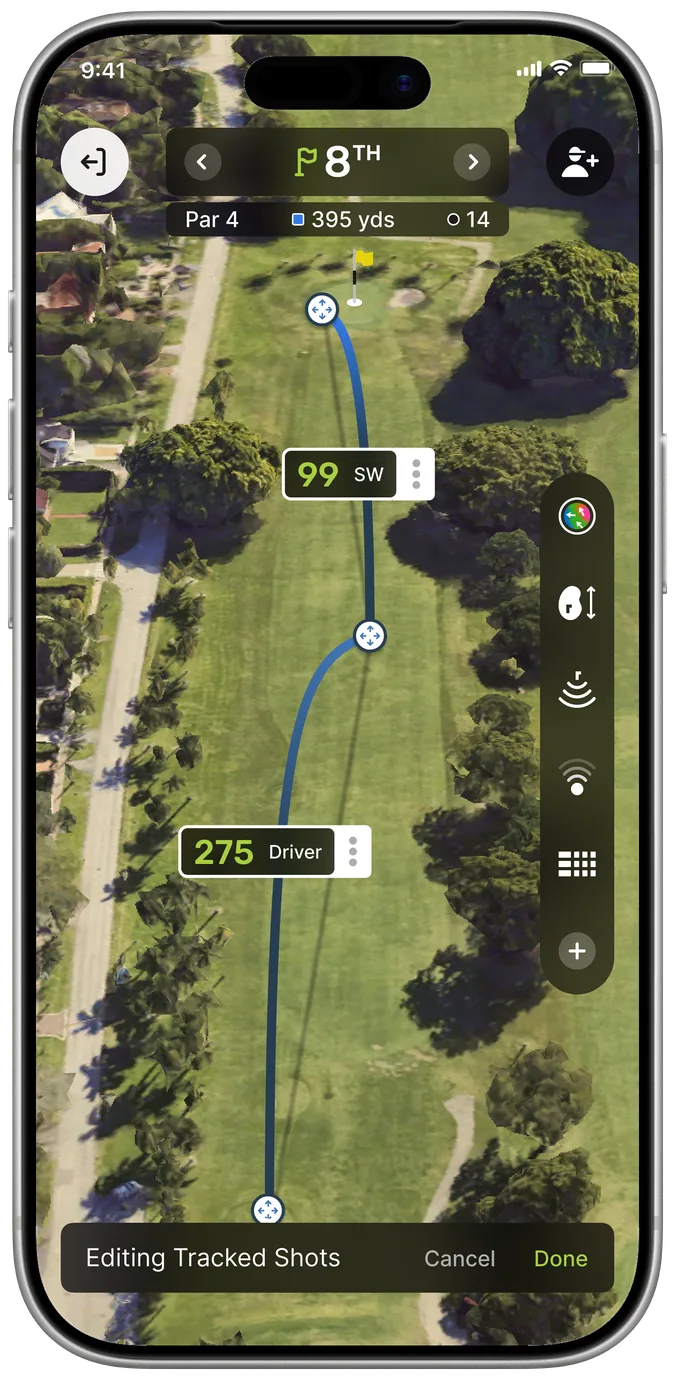
- See every shot and distance on the map


Club-by-club distance stats are a Pro feature. Try TheGrint Pro free for 7 days.